
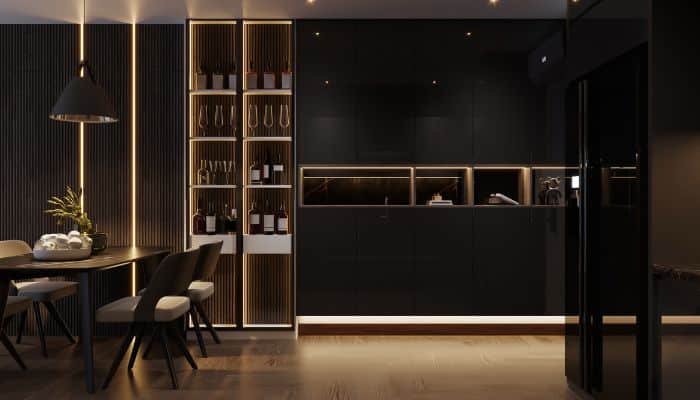
Contemporary design in interior designing refers to a style that reflects what is current, evolving, and relevant in the present time. Unlike design movements that are rooted in a specific historical era, contemporary interiors continuously adapt to new materials, technologies, lifestyles, and cultural preferences. This flexibility makes contemporary design one of the most dynamic and widely adopted interior styles today.
At its core, contemporary interior design emphasizes simplicity, functionality, and clean visual lines. Spaces are intentionally uncluttered, focusing on balance, proportion, and subtle elegance rather than ornamentation. Neutral color palettes dominate, often enhanced with bold accents or textured elements to add visual interest without overwhelming the space.
In modern homes, contemporary interior design naturally aligns with open floor plans, natural light, and efficient use of space. It supports the idea that interiors should feel calm, comfortable, and practical while still maintaining a refined aesthetic. This makes it particularly appealing for urban living and evolving lifestyle needs.
What Is Contemporary Style in Interior Design?
Contemporary style in interior design is defined by clean lines, smooth surfaces, and a minimalist approach to décor. Furniture often features sleek profiles with exposed legs, avoiding heavy detailing. Materials such as glass, metal, stone, and natural wood are commonly used to create contrast and texture.
Color schemes usually revolve around whites, beiges, grays, and blacks, layered with accent colors like deep blue, green, or warm earth tones. Lighting plays a critical role, with an emphasis on natural daylight complemented by thoughtfully placed artificial lighting to enhance mood and functionality.
Is It Designer Ceiling Lighting for Contemporary Interiors?
Lighting is a defining feature of contemporary interiors, and designer ceiling lighting often becomes a focal point rather than a hidden utility. Recessed lights, linear LED fixtures, pendant lights, and sculptural ceiling designs are commonly used to enhance spatial clarity and visual depth.
Rather than ornate chandeliers, contemporary spaces favor lighting that is geometric, understated, and purposeful. Ceiling lighting is integrated into the overall design, helping to define zones within open layouts and highlighting architectural features without drawing unnecessary attention.
What Is Classic Contemporary Interior Design?
Classic contemporary interior design blends timeless design principles with modern simplicity. It incorporates classic elements such as symmetry, high-quality materials, and balanced proportions while stripping away excessive decoration.
This approach allows interiors to feel elegant yet approachable. Traditional textures like marble or wood may be paired with contemporary furniture and neutral tones, resulting in a space that feels both enduring and current. Classic contemporary design is often chosen by homeowners who prefer a refined look without leaning too heavily into minimalism.
How to Mix Contemporary and Traditional Interior Design?
Mixing contemporary and traditional interior design requires balance and intentional contrast. The key is to maintain a cohesive color palette while allowing both styles to coexist naturally. For example, a traditional architectural element like crown molding can be paired with contemporary furniture to create visual harmony.
Textures and materials help bridge the gap between styles. Classic fabrics can soften modern lines, while contemporary lighting can update traditional spaces. When done thoughtfully, this combination creates interiors that feel layered, personal, and timeless rather than trend-driven.
Key Characteristics of Contemporary Interior Design
Several defining traits consistently appear in contemporary interiors:
- Clean, straight, or subtly curved lines
- Neutral color foundations with controlled accent tones
- Emphasis on natural and artificial lighting
- Open layouts that enhance flow and functionality
- Minimal décor with intentional focal points
These characteristics allow contemporary interiors to remain adaptable as trends shift, ensuring longevity without sacrificing style.
Why Contemporary Design Remains Relevant?
Contemporary interior design continues to evolve alongside modern living. Its adaptability makes it suitable for apartments, family homes, and workspaces alike. By focusing on comfort, efficiency, and visual clarity, contemporary interiors meet both aesthetic and practical demands.
Ultimately, contemporary design is less about following strict rules and more about responding to how people live today. Its balance of simplicity, innovation, and timeless appeal ensures it remains a leading choice in interior designing well into the future.
